
Lowndes County Arrest Records and Court Charges
A Lowndes County arrest record is the record of the arrest itself. It shows who was taken into custody, which agency made the arrest, and the booking that follows. Most county arrests run through the Lowndes County Sheriff's Office and the Adult Detention Center in Columbus. The arrest record is not a verdict. It marks the start of a case, not the end of one. After booking, a prosecutor reviews the facts and decides which formal charges to file with the court clerk. Those filed charges become the court charge record.
The two records are easy to confuse, but they are kept apart. The arrest and booking side lives with the sheriff. For the jail roster and booking detail, the county inmate records page is the right starting point. The court charges after arrest are a different file. They reflect what the prosecutor actually filed, and they are tracked through the case as it moves. The full case file, with pleas, hearings, and the final outcome, sits in the criminal court records.
The county sheriff is the agency that handles arrests and runs the detention center, as shown on the Lowndes County Sheriff's Office site.
The sheriff books arrestees, holds them before court, and reports custody data to the public roster. None of that decides guilt. The charge record begins only when a prosecutor signs and files a charging document.
How to Find Lowndes County Arrest Records and Charges
Charges and their status show up in the court case file, not the jail roster. The Circuit Clerk uses the Delta Computer Systems Circuit Clerk portal, which divides records into Civil Court, Criminal Court, Judgment Roll, and Marriage License. Criminal case access is by subscription, and official copies still come from the courthouse. Electronically filed cases also route through Mississippi Electronic Courts and its public companion, PAMEC. Booking detail itself is held by the sheriff, so the jail roster is the place for custody facts.
- Open the Circuit Clerk Criminal Court portal or the PAMEC public search after registering.
- Search by the defendant's name or by the case number if you have it.
- Open the case and read the list of charges the prosecutor filed.
- Check each charge's statute code, severity level, and current status.
The official sheriff app feed lists custody entries, and its data structure includes charge labels named chargeCode, chargeDescription, bondAmount, and dispositionDescription. The honest caveat is that sampled public entries did not display values for those labels, so the roster is not a reliable charge source on its own. That feed is documented in the sheriff app manifest.
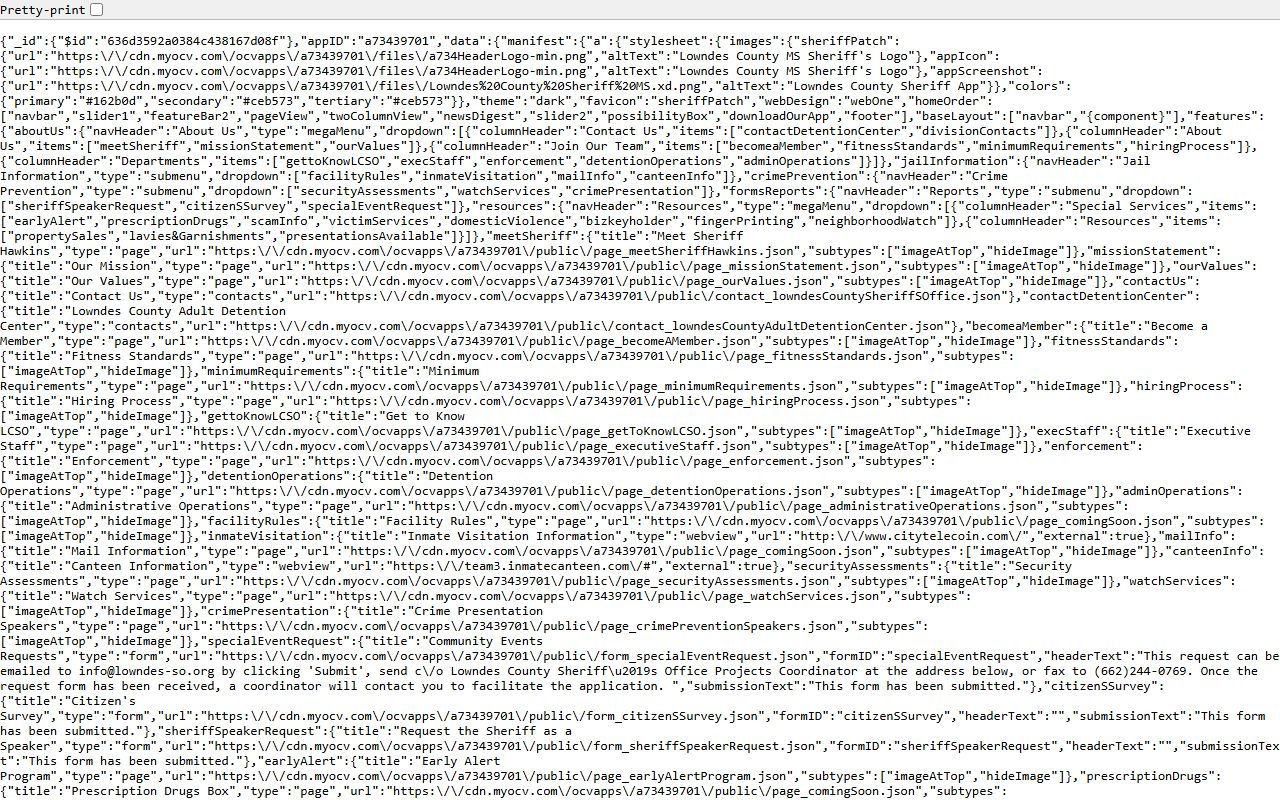
Because the roster may show demographics and custody dates but not charges, the court file remains the authority on what a person is actually charged with.
How Charges Get Filed After an Arrest
Walk the path forward from the arrest. The arrest and booking happen first. The charge record begins later, when a prosecutor files a charging document with the court. That document names the offense, ties it to a statute, and sets the case in motion. Mississippi uses three main forms. Felonies in Circuit Court are usually charged by grand jury indictment, while many lower offenses begin with a sworn complaint or affidavit.
| Complaint | Information | Indictment | |
|---|---|---|---|
| Filed By | Officer / Prosecutor | Prosecutor | Grand Jury |
| Common For | Misdemeanors | Many felonies | Serious felonies |
| Starts | The case | The case | The case |
A complaint or affidavit often supports an arrest and a first appearance in Justice Court or Columbus Municipal Court. Felony matters then move toward a grand jury, which reviews the evidence and decides whether to return an indictment in Circuit Court. The charge a person is booked on can differ from the charge that is finally filed.
Who Files Charges After a Lowndes County Arrest
Felony charges are filed by the prosecutor, not the arresting officer. The 16th Circuit District Attorney's Office prosecutes all felonies for Lowndes, Oktibbeha, Clay, and Noxubee counties. The District Attorney is Scott Colom. After a felony arrest, the office reviews the case, presents it to a grand jury where required, and pursues the indictment through Circuit Court. Misdemeanors and city offenses are charged and heard at the Justice Court or Columbus Municipal Court level instead.
Some charges are federal rather than state. When that happens, the case is handled by the U.S. Attorney's Office for the Northern District of Mississippi, and the record sits in the federal system instead of the county clerk's files.
So a single arrest can lead to charges at the city, county, state, or federal level, and the office that files them determines where the charge record is kept.
Note: A grand jury decides whether enough evidence exists to indict on a felony, which means some arrests never result in a filed felony charge.
Charge Status and What It Means
Charges are not fixed once filed. As a case moves, a charge can be amended, reduced, added, dropped, or dismissed. Reading the status correctly matters, because a single case may carry several charges that each sit at a different stage. The terms below appear often in Mississippi court files.
| Status | What It Means |
|---|---|
| Pending | The charge is filed and the case is active, with no final outcome yet. |
| Amended / Reduced | The charge was changed, often to a lesser offense, by motion or agreement. |
| Dismissed | The charge was dropped before any conviction was entered. |
| Nolle Prosequi | The prosecutor chose not to pursue the charge, ending it without a verdict. |
A dismissed or nolle prosequi charge can still appear in the public record until it is sealed or expunged. The status field is what tells a reader whether a charge is live, changed, or closed.
Charges vs. Convictions
Being charged is not the same as being convicted. A charge is an accusation that a prosecutor must still prove. A conviction is the result of a guilty plea or a verdict. Many charges are reduced or dropped, and an arrest record can show charges that never led to a conviction at all.
| Charge | Conviction | |
|---|---|---|
| Stage | Accusation | Verdict or plea |
| Burden of Proof | Probable cause | Beyond reasonable doubt |
| Public Record | Yes | Yes |
Anyone reading a record should check the disposition before drawing a conclusion. A charge with no conviction does not establish guilt under the law.
Charge Codes and Severity Levels
Each charge is tied to a Mississippi statute, and that statute sets the severity level. The three broad levels are felony, misdemeanor, and lesser violation or infraction. Felonies carry the most serious penalties and are tried in Circuit Court. Misdemeanors are handled in Justice Court or Columbus Municipal Court, where punishment is limited to fines and county-jail time.
One arrest can produce several separate charges. A single incident may list a felony count, a related misdemeanor, and a traffic or ordinance violation, each with its own code and its own status. Reading the code helps a viewer see exactly which law a charge is built on and how serious it is.
Pretrial Intervention After Charges Are Filed
Not every filed charge moves straight to trial and sentencing. The 16th District Attorney's Office runs a Pretrial Intervention Program, and certain offenders may qualify by filling out and submitting an application for consideration. The application and related paperwork are posted on the District Attorney's forms page. Intervention can require supervision, conditions, fees, counseling, or restitution, and successful completion can lead to dismissal or record relief.
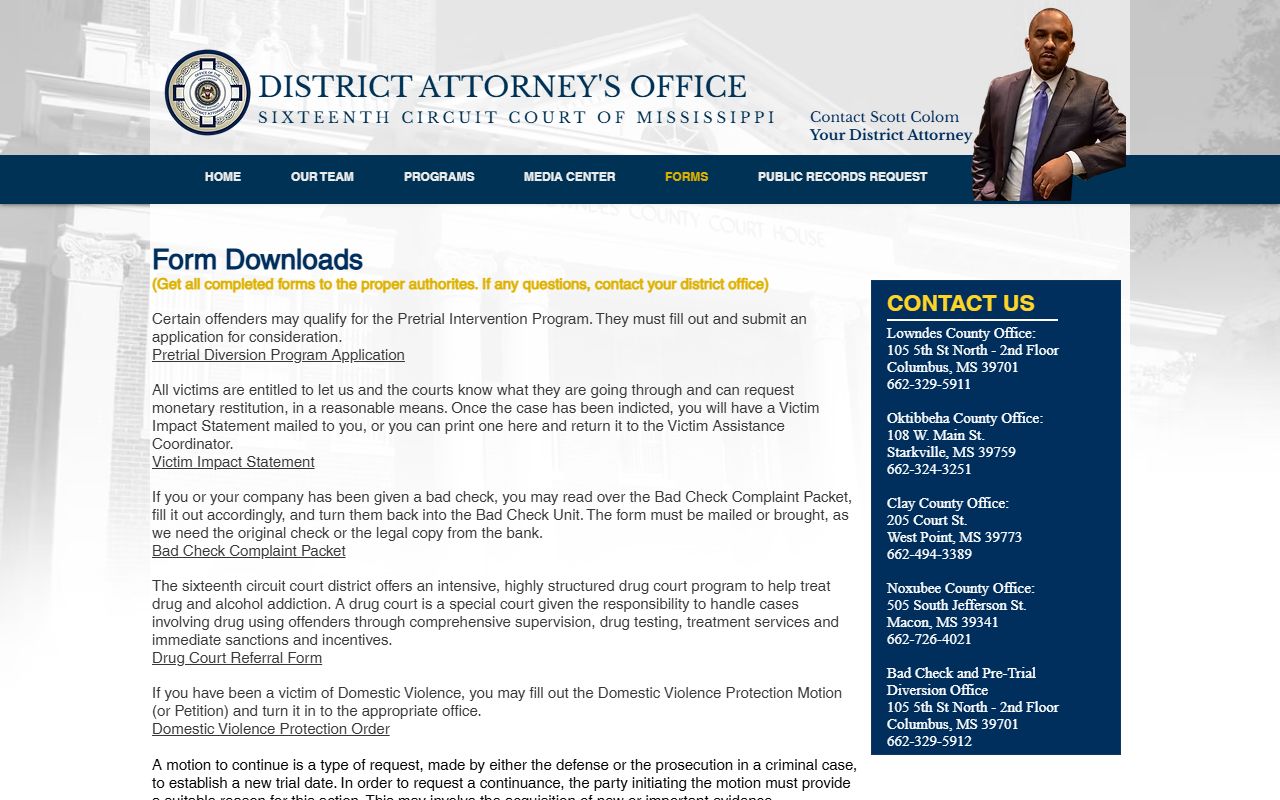
For a case routed this way, the docket may show diversion conditions and review entries rather than a quick path to a conviction and sentence.
Drug Court and Intervention Court Handling
The 16th Circuit District runs an intensive, structured drug court for drug and alcohol cases. Its drug court program uses close supervision, drug testing, treatment, and a system of sanctions and incentives. The program serves the 16th Circuit, which includes Lowndes County. Eligible criminal cases may be diverted into this supervised track instead of ordinary sentencing.
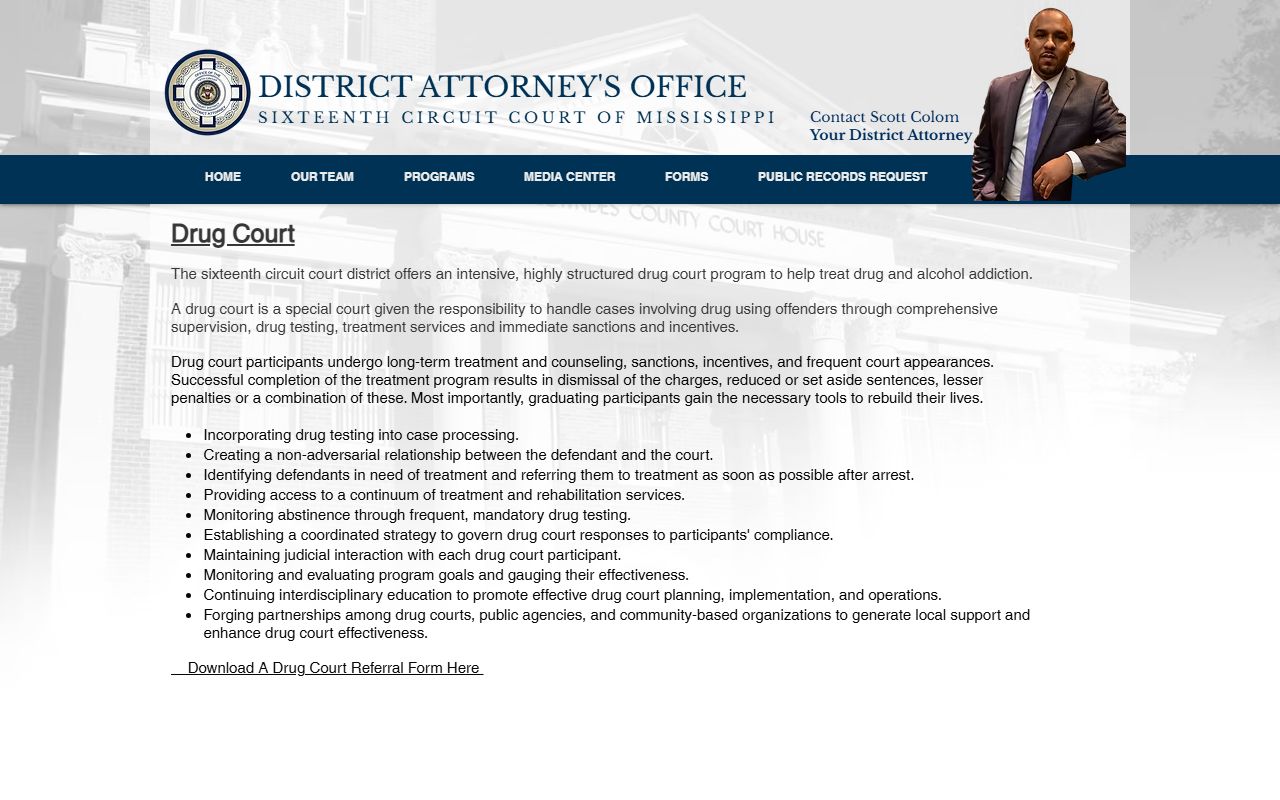
When a case enters drug court, its file can show review hearings, treatment compliance, sanctions, incentives, and a graduation or termination event. That timeline looks different from a simple charge-to-sentence case.
Note: Diversion and drug court change how a charge is resolved, so two cases with the same charge can have very different records depending on the track taken.
Statewide Charge and Criminal History Lookups
There is no single free public database that holds every Mississippi charge and criminal history. Electronically filed court records reach the public through PAMEC, the public arm of Mississippi Electronic Courts, with a small annual registration fee and a per-page charge. The Mississippi Public Records Act backs general access to government records, but court confidentiality rules and sealing orders can limit what shows.
For people who were sentenced to state prison, the Mississippi Department of Corrections inmate search is a separate statewide tool. It covers sentenced inmates and parolees, not every county booking. A complete charge picture for a Lowndes County case still routes back to the Circuit Clerk and the court file, where the official record lives.
Public Defenders and Indigent Defense
A person facing charges who cannot afford a lawyer may qualify for a public defender. The Mississippi Office of State Public Defender keeps a directory through its find a public defender resource. In Lowndes County Youth Court, a minor charged with a delinquent act from an indigent family, as determined by the court, is represented by a public defender.
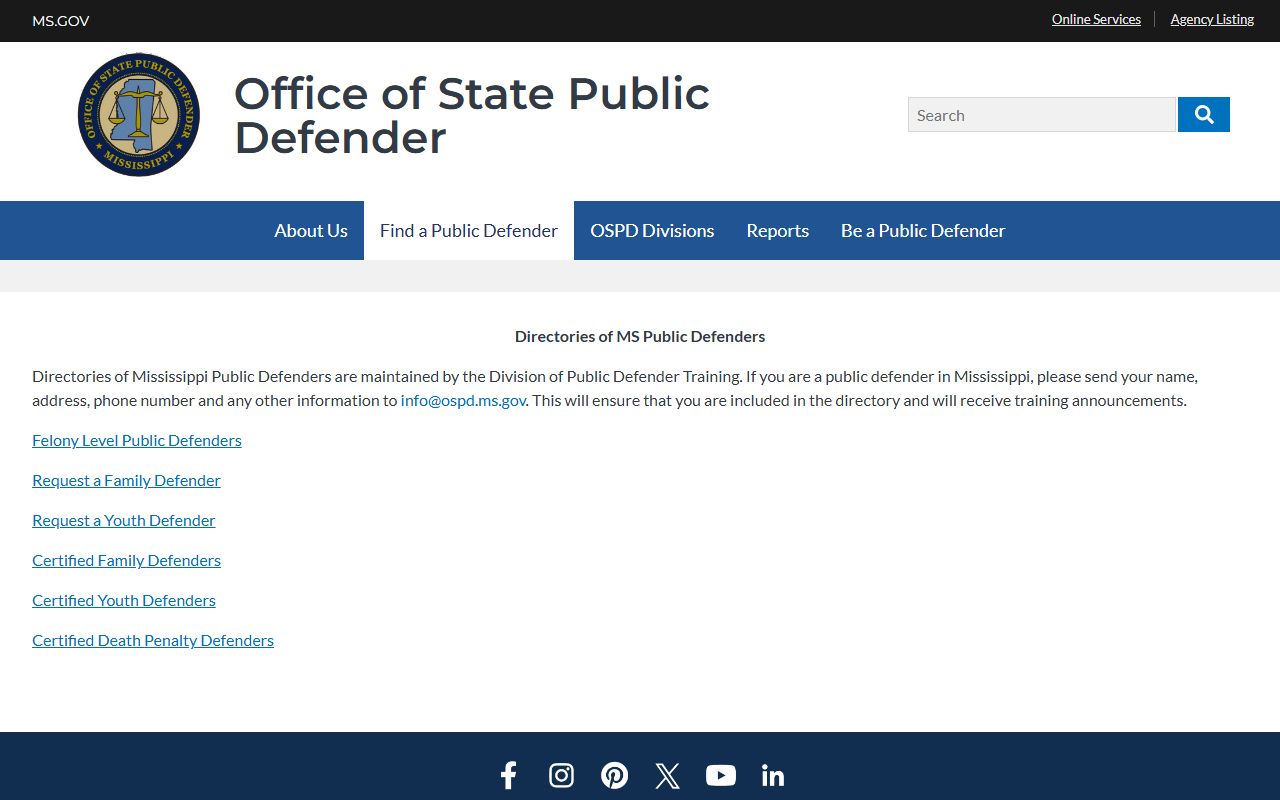
For adult cases, indigent-defense questions route to the court handling the charge or to the state directory. The public defender office is the right channel, not a private referral service.
Sealed and Expunged Charge Records
Some charges can be removed from public view. A sealed record is restricted by court order, while an expunged record is cleared from public access after a court grants statutory relief. Mississippi's main expunction statute is Miss. Code Ann. Section 99-19-71. Some first-offender misdemeanors and certain felonies may qualify after sentence completion and a waiting period, but the law excludes serious and violent offenses.
- Sealed
- The charge stays on file but is hidden from public search. Law enforcement and the courts may keep limited access under the order.
- Expunged
- The charge is treated as if it never happened for most purposes. Public databases and agencies must follow the expunction order.
A petition usually goes to the court where the charge, conviction, or disposition occurred, which may be Circuit, County, Justice, or Municipal Court. Once a judge signs the order, it is sent to the agencies that hold the record.
Background Check Considerations
A casual name search is not the same as a regulated background check. Employers, landlords, and lenders that use records for hiring, housing, or credit must follow the federal Fair Credit Reporting Act and use a licensed consumer reporting agency. A court file viewed for personal knowledge does not carry those protections, and it may be out of date or incomplete.
Important: This site is not an FCRA-regulated consumer reporting agency, and its information may not be used for employment, tenant, credit, or insurance screening decisions.
Restricted Charge Records in Lowndes County
Not every charge is open to the public. Youth Court matters involving minors are confidential under Miss. Code Ann. Section 43-21-251, so juvenile charges should not be treated as ordinary public results. Sealed and expunged charges are removed from public access by court order. Adoption and mental-health commitment matters in Chancery Court are restricted family-law categories.
Charges tied to an active investigation, a sealed indictment, or personal identifiers such as Social Security numbers and birth dates may also be withheld or redacted. When a record is missing or limited, the clerk for the court that holds the file is the place to confirm what is available and how to request it.