
What Probate Covers in Lowndes County
Probate is the legal process of settling what a person leaves behind. It proves a will, names someone to manage the estate, pays valid debts, and passes property to heirs. In Lowndes County these matters run through Chancery Court, not a stand-alone probate court. Mississippi gives Chancery Court its equity authority, and that authority covers estates of decedents, both testate and intestate.
The reach is broad. Chancery Court hears estate administration, will probate, guardianships of minors, conservatorships of adults who cannot manage their own affairs, heirship determinations, minors settlements, muniment of title, will contests, and probate accounting. The same court also handles divorce, custody, adoptions, land-title disputes, and mental-health commitments, so probate files sit alongside other equity cases in the clerk's records.
The Chancery Clerk keeps the files. Cindy Goode leads that office, and her staff maintains the case books, indexes, and original papers that make up each estate record. Anyone researching an estate, whether an heir, an attorney, or a genealogist, starts with Chancery Court and the Chancery Clerk.
Probate Terms Defined
Estate paperwork uses words that rarely come up in daily life. A short glossary makes a Lowndes County probate file easier to read. These five terms appear in most estate and guardianship cases.
- Testator
- The person who made the will. A testator decides who receives property and who should manage the estate after death.
- Executor
- The person named in a will to carry it out. The court confirms the executor and issues letters testamentary as proof of authority.
- Intestate
- Dying without a valid will. State inheritance rules then decide who the heirs are and what share each one takes.
- Guardianship
- A court arrangement giving an adult legal responsibility for a minor or the minor's property when a parent cannot serve.
- Conservatorship
- A court arrangement placing an adult who cannot manage personal or financial affairs under the care of an appointed conservator.
How to Search Lowndes County Probate Records
There is no single free public portal for Lowndes County estate files. Searching means matching the record to the right channel. A modern online index covers a window of chancery cases, and the Chancery Clerk holds everything else. Treat any online result as a finding aid, not a certified copy.
The online index is the Delta Chancery Court case search, which carries Chancery Court cases for roughly 2002 to 2014 along with land records. Access is by subscription. The same Delta system serves the county's other records, and Lowndes County court records across several case types route through related portals.
- Decide what kind of matter it is: a decedent's estate, will probate, guardianship, conservatorship, minor settlement, heirship, or will contest.
- Open the Delta Chancery case search and subscribe if the case likely falls inside the 2002 to 2014 window.
- Search by party name in last-name-first format, or by case number, filed date, or file number if you have them.
- Narrow long result lists with the Nature of Action dropdown, choosing the probate category that fits.
- For current files, older files, or a certified copy, contact the Chancery Clerk by phone, mail, or an in-person visit.
Delta Chancery Search Fields
The Delta Chancery case search lets a researcher start from any one of several fields. Only one is needed to run a query. The Nature of Action dropdown is the key to probate work, because it filters estate cases out of the broader chancery docket.
| Field Label | Type | Notes |
|---|---|---|
| Party Name | Text | Last name first; covers petitioner, heir, executor, or ward. |
| Case Number | Text | Direct lookup when the number is known. |
| Filed Date | Date | Alternative search route by filing date. |
| Final Disposition Date | Date | Finds cases by their closing date. |
| Docket (Book/Page) | Text | Searches the chancery minute book reference. |
| File Number | Text | Clerk file-number lookup. |
| Nature of Action | Dropdown | Includes Accounting (Probate), Conservatorship, Guardianship, Heirship, Intestate Estate, Minors Settlement, Muniment of Title, Other-Probate, Testate Estate, and Will Contest. |
Refinements help when a common surname returns too many hits. A filing date range and the refinement option work on name searches to trim the list. Note: the online index can lag behind the courthouse, so a missing case does not always mean no case exists.
Probate Office Contacts in Lowndes County
Chancery Court and the Chancery Clerk operate from the Lowndes County Courthouse in downtown Columbus. The court hears the case; the clerk records and preserves the file. For estate questions, certified copies, and access to files outside the online window, the Chancery Clerk's office is the office to call.
Lowndes County Chancery Clerk
Cindy Goode, Chancery Clerk
505 2nd Avenue N
Columbus, MS 39701
Mailing: P.O. Box 684, Columbus, MS 39703
662-329-5800
Monday to Friday, 8:00 a.m. to 5:00 p.m.
Chancery Court, 14th Chancery District
Lowndes County Courthouse
505 2nd Avenue N
Columbus, MS 39701
Chancellors Paula Drungole-Ellis, Joseph N. Studdard, Rodney P. Faver
Monday to Friday, 8:00 a.m. to 5:00 p.m.
Estates and guardianships affect property and carry fiduciary duties, so many filers work with an attorney. The clerk can confirm what a file contains and how to request copies, but staff cannot give legal advice on how to open or run an estate.
Probate Search and Copy Fees
The clearest published cost for online probate research is the Delta subscription. It opens Chancery Court cases and land records, but not Circuit Court files. Certified copies come from the Chancery Clerk, and the office should be asked directly for the current per-page and certification charges before mailing a request.
| Item | Amount |
|---|---|
| Delta Chancery subscription, monthly | $30 per month |
| Delta Chancery subscription, annual | $360 per year |
| Scope of the subscription | Chancery cases and land records, not Circuit Court |
| Certified copies of estate documents | Contact the Chancery Clerk for current amounts |
The online index is not an official record. A certified copy from the Chancery Clerk is what a bank, title company, or another court will accept for legal use.
What Lowndes County Probate Records Show
An estate file grows as a case moves forward. It opens with a petition and can close years later with a final decree. The papers in between document the people, the property, and every decision the court approved along the way.
- Parties and roles: estate name, petitioner, heirs, beneficiaries, guardian or conservator, ward, administrator, and executor.
- Filing metadata: case number, file number, docket book and page, filing date, and final disposition date.
- Case categories: testate estate, intestate estate, guardianship, conservatorship, will contest, accounting, minors settlement, and muniment of title.
- Documents: petition or application, the will, affidavits, letters testamentary or of administration, notices, inventory, accounting, orders, and the final decree.
Letters testamentary and letters of administration matter most to families. They are the court's written proof that a named person may act for the estate, collect assets, and sign on the estate's behalf.
Historic Lowndes County Estate Records
Lowndes County keeps a probate trail that few counties can match. The Columbus-Lowndes Public Library local history indexes include a Chancery Court probate records index covering 1830 to 1964, completed by Mona Vance in 2006. For genealogists and estate researchers, this index is the gateway to nearly a century and a half of estate files that the modern subscription portals do not reach.
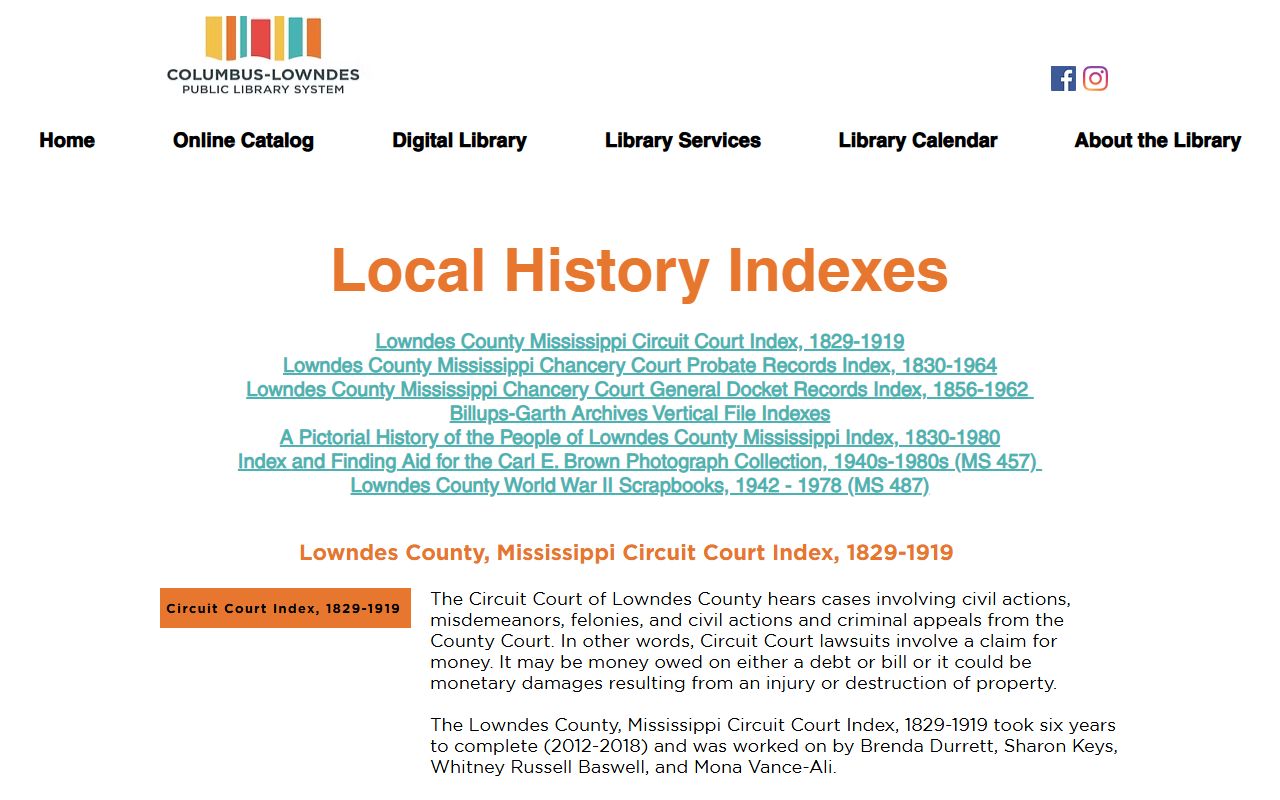
The index reflects how broad early probate work was. Under Chancery Court, the Probate Division heard estate matters, apprenticeships, guardianships, lunacy cases, appointments, and non-compos-mentis matters. The original case files sit in the Billups-Garth Archives within the library's Local History Department.
Access follows a simple path. Find the entry in the index, note the case number, then contact the Local History Department and request the original file by that number. Note: the historic files are archived material, so plan to work through the library's Local History Department rather than the online court systems.
Separate Federal Record Channels
A few federal systems sit near estate work but are run by the federal courts, not Lowndes County. They are listed here so researchers do not mistake them for county probate tools. An estate can intersect a bankruptcy, yet the files live in different places.
Lowndes County falls under the U.S. Bankruptcy Court for the Northern District of Mississippi. Bankruptcy is a federal matter, so a debtor's case is not searched through the Chancery Clerk. When a person who owes or is owed money in an estate also files bankruptcy, the two cases run on parallel tracks in separate courts.
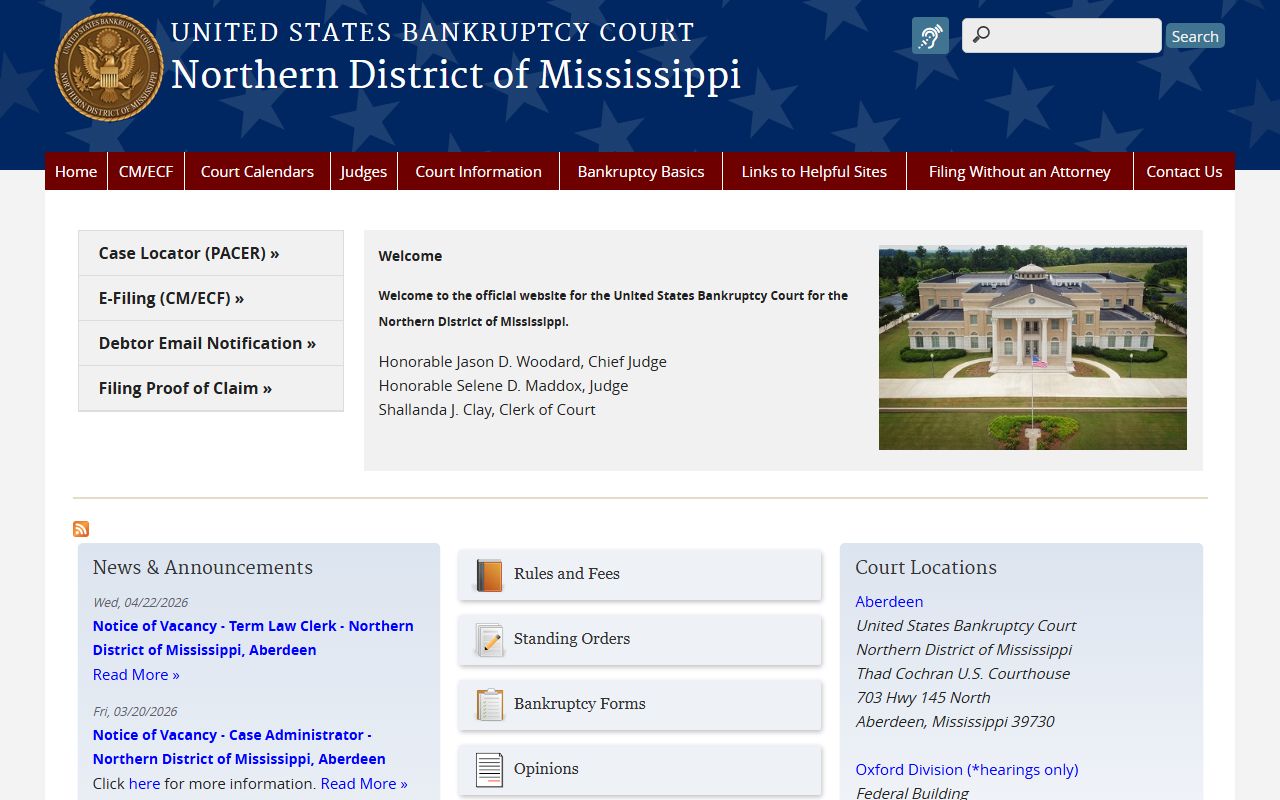
Federal case documents themselves are reached electronically. The bankruptcy court uses CM/ECF for filing and case access, the federal counterpart to the county's online indexes. It is a federal channel and returns nothing from the Lowndes County Chancery docket.
One more federal pointer can come up while tracing a person tied to an estate. The Bureau of Prisons inmate locator finds people in federal custody. Federal custody has nothing to do with estate files, but the locator is the right tool when a researcher needs to confirm where a federal inmate is held.
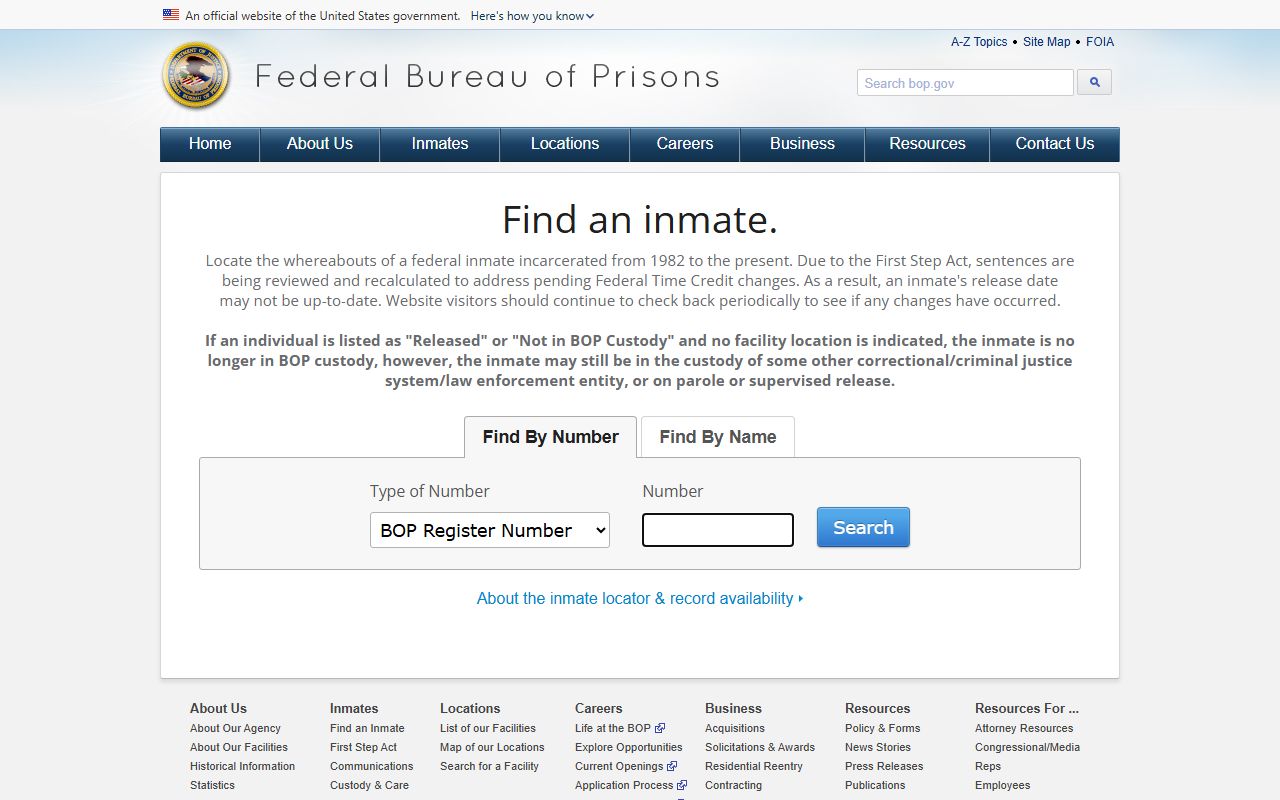
None of these federal tools replace the Chancery Clerk for an estate, a will, or a guardianship. They simply cover records the county courthouse never holds.
Restricted Probate Records
Not every part of an estate file is open. Mississippi protects sensitive details, and a chancellor can seal more by order. Researchers should expect gaps where the law shields a person or a family.
Minor guardianship records and mental-health or lunacy commitment matters carry the tightest limits. Adoption-related estate files can be sealed, and financial identifiers such as account numbers and the names of minor children may be redacted from otherwise public papers. Estates often touch family law, and divorce, custody, and support files share the same chancery docket; details in those Lowndes County divorce records can be restricted for the same reasons.
When access is denied, the clerk routes the request to the proper channel. A sealed file may open only by court order, and confidential matters may require a showing of legal interest before staff release anything.